

What We Carry: On Jewelry, Memory, and the Stories We Wear
I found an old silver chain at the bottom of a drawer last week.
It was tarnished, almost black in places. The clasp was bent from years of clumsy fingers. The pendant—a simple geometric shape, nothing special—was scratched beyond repair. I should have thrown it out years ago.
Instead, I sat on the floor and held it for a long time.
That chain was from my sophomore year of high school. I'd saved for months, skipping lunch, mowing lawns. The day I finally bought it, I walked out of the shop feeling like a different person. Someone more put-together. Someone older. Someone who had opinions about style.
The funny thing? I never wore it much. But I never got rid of it either. Because somewhere along the way, that scratched-up, tarnished piece of metal stopped being "jewelry" and started being a time capsule.
The Thing About Objects
We don't talk enough about what jewelry actually does.
Sure, it decorates. It catches light, draws the eye, completes an outfit. Walk into any store and that's what they'll sell you: shine, trend, the promise of looking good.
But that's not why we keep things.
We keep them because objects are the only physical witnesses we have. A ring on your grandmother's finger outlives your grandmother. A bracelet given on a certain night outlives the night, and sometimes the person who gave it. The metal stays. The stones stay. And slowly, invisibly, they absorb the moments they've passed through.
I've been making jewelry for almost a decade now. Not the mass-produced kind—the kind you hold, and weigh, and turn over in your hands. And over the years, I've noticed something: people don't buy jewelry because they need something around their neck or on their finger. They buy it because something about that particular piece feels like them.
Or like who they want to become.
The First Time You Put It On
There's a moment I've watched play out hundreds of times.
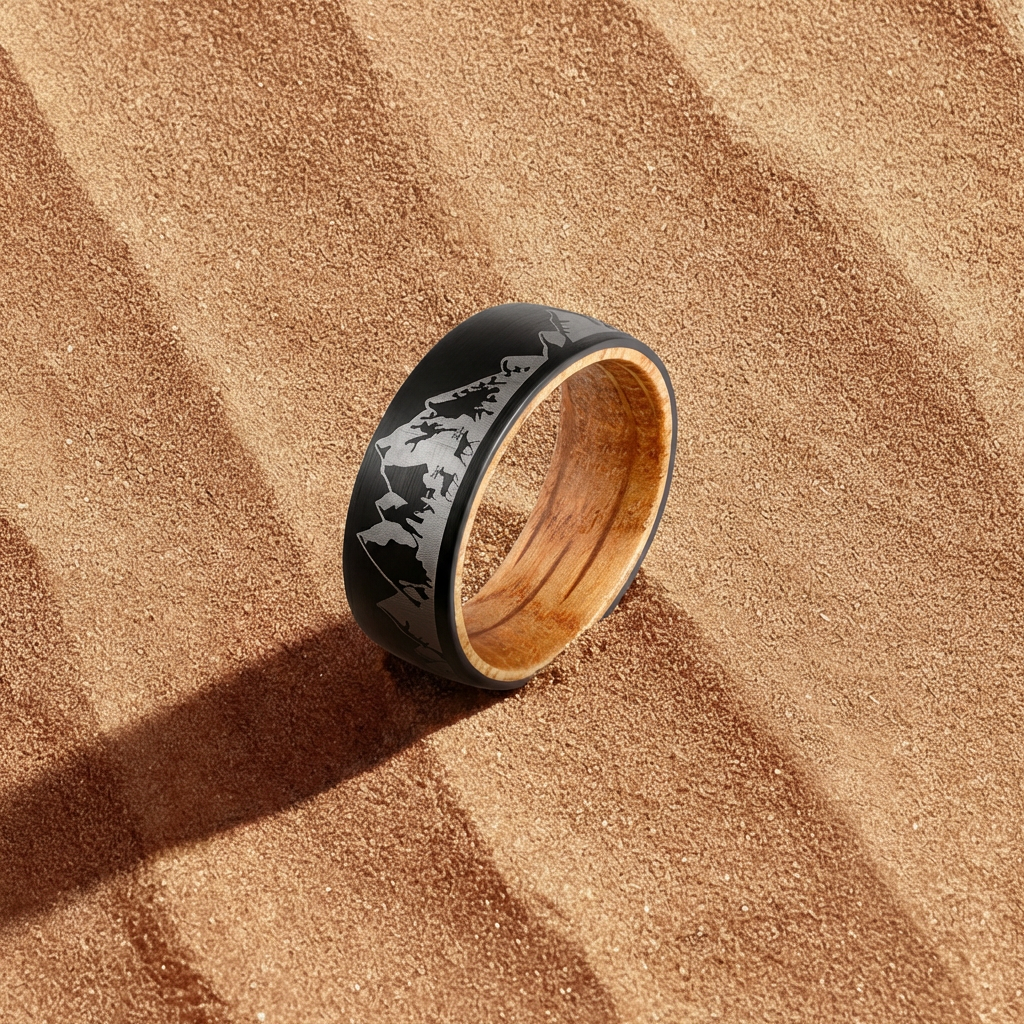
A customer stands in front of a mirror. They've just put on a ring—maybe a tungsten band with a wood inlay, maybe a Damascus steel piece with patterns like frozen water. They tilt their hand. The light catches. And then, without thinking, they reach up and touch it.
That gesture—the unconscious touch—is everything. It's not about checking how it looks anymore. It's about feeling it. Testing the weight. Making it yours.
I've seen people try on the same ring three times before buying it. Walk around the shop, come back, put it on again. They're not being indecisive. They're listening to whether it speaks.
And when it does, when that quiet click happens, they walk out different. Not because the ring changed them, but because they gave themselves permission to claim something that felt true.
The Stories We Don't Tell
The most interesting jewelry never gets photographed for Instagram.
It's the ring a man wears on his pinky—his father's, resized, slightly too loose now but he won't take it off. It's the pendant a woman tucks under her shirt, a gift from someone she doesn't talk to anymore but still carries. It's the bracelet you never take off because taking it off would mean the end of something, and you're not ready for that yet.
These pieces don't trend. They don't belong to seasons or collections. They belong to lives.
I made a ring once for a customer who wanted something to mark his first year sober. Not a celebration, exactly. More like a witness. Something solid he could look at on hard days. We chose meteorite for the inlay—4.5 billion years old, older than Earth itself—because he said he needed the reminder that his problems weren't the oldest things in the universe.
That ring will never be on a billboard. But it's doing its job.
Why We Make Things by Hand
There's a reason handmade jewelry feels different.
When something is cast by machine, it's perfect. Every edge identical, every surface uniform. And that perfection has its place. But it's also, in a way, silent. No memory of the making.
When something is made by hand—cut, filed, polished by someone who spent hours getting it right—that process leaves traces. Not flaws, exactly. Signatures. The slight asymmetry that makes a thing look alive. The tool mark that tells you a human was here.
I think we sense that, even when we can't name it. We pick up a handmade ring and it feels different against our skin. Not because it's better, but because it's honest. Someone made this for someone else to wear. That's the whole transaction. No pretending otherwise.
The Ones That Get Away
I have a list, in my head, of pieces I should have kept.
A Damascus steel ring with a pattern like a river delta. A black tungsten band with a single gold line—minimal, perfect, gone to a customer in Toronto who bought it for himself on his fortieth birthday. I remember his face when he put it on. Quiet satisfaction. Like he'd been looking for something a long time and finally found it.
I could have made another just like it. I never did. Somehow it wouldn't have been the same.
That's the thing about making jewelry: every piece that leaves is a little bit gone. You hope it found its person. You hope it's doing what it's supposed to do—being there, being solid, being the thing someone reaches for when they need to feel anchored.
What We're Really Buying
So here's what I've come to believe.
When you buy a piece of jewelry—really buy it, not just acquire it—you're not buying metal or stones. You're buying a future artifact. Something that will outlive you, that will carry your memory forward, that will be touched by hands you'll never meet.
You're buying the weight of your own story, made physical.
That tungsten ring you put on every morning? It will remember the coffee cups you held, the hands you shook, the moments you clenched your fist without realizing. That Damascus steel pendant? It will catch the light in rooms you haven't entered yet, be seen by eyes that haven't met you.
And years from now, someone will find it at the bottom of a drawer. They'll turn it over in their hands. And for a moment, you'll be there again.
That's not just jewelry. That's time travel.
I put the old silver chain back in the drawer. Didn't throw it out. Couldn't.
Maybe I'll polish it someday. Maybe I'll wear it again. Or maybe it'll stay there, tarnished and scratched, doing what it's always done: holding a place for someone I used to be.
That's the job, after all. That's what we carry.